


What Is a Flake Ice Machine?
Release time: 2026-03-20
In industries where temperature control and product freshness are critical, ice is not just a convenience—it’s an essential part of the process. Among the different types of ice-making technologies, flake ice machines stand out as one of the most efficient and versatile solutions.
But what exactly is flake ice? How does a flake ice machine work? And why is it widely used across industries like food processing, fisheries, and concrete cooling?
This guide will walk you through everything you need to know.
1. What Is Flake Ice?
Flake ice is a type of soft, dry ice formed into thin, irregular flakes. It typically has the following characteristics:
· Thickness: 1.0–2.5 mm
· Temperature: around -5°C to -8°C
· Shape: flat, thin, and broken flakes
· Moisture content: relatively low surface water
Key Advantages of Flake Ice:
· Excellent cooling efficiency – large contact surface area
· Gentle on products – does not damage delicate items like fish or vegetables
· Uniform distribution – easy to spread evenly
· Energy-efficient production

2. What Is a Flake Ice Machine?
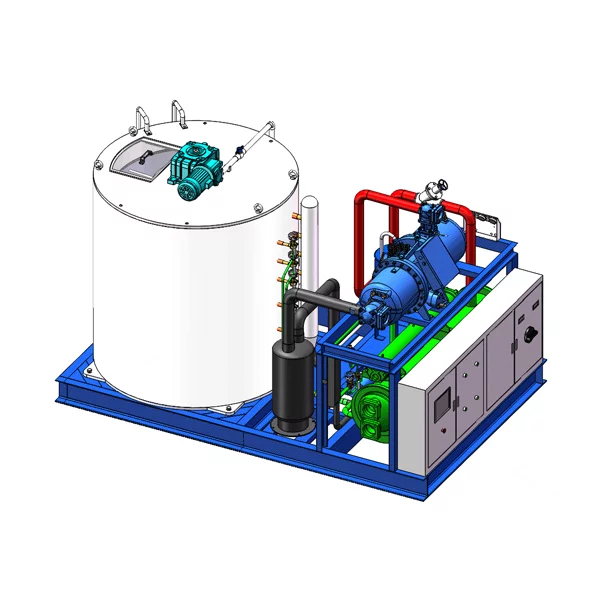
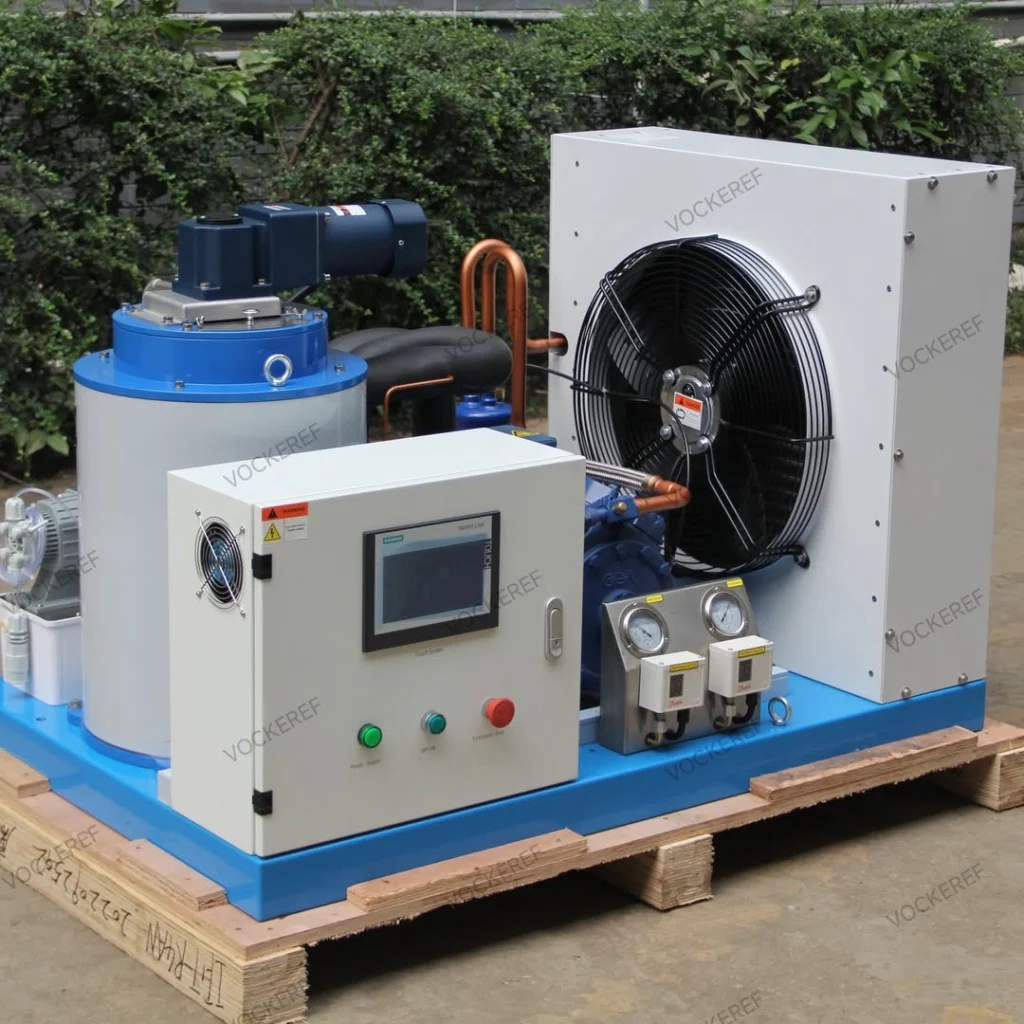
A flake ice machine is a refrigeration system designed to continuously produce flake ice by freezing water on a cold surface and then scraping it off. The picture shows a 0.5T flake ice machine.
3. Main Components of a Flake Ice Machine
A typical flake ice machine includes:
· Compressor – provides refrigeration power
· Evaporator drum – the core component where ice is formed
· Ice blade (scraper) – removes ice from the surface
· Water supply system – feeds water into the evaporator
· Control system – manages operation and safety
· Condenser unit – dissipates heat (air-cooled or water-cooled)
3.1 Core Component Deep Dive: The Evaporator Drum
Among all components, the evaporator drum is the heart of the flake ice machine. It directly determines the machine’s efficiency, ice quality, energy consumption, and lifespan.
A high-quality evaporator is often what separates a reliable industrial machine from a low-end one.
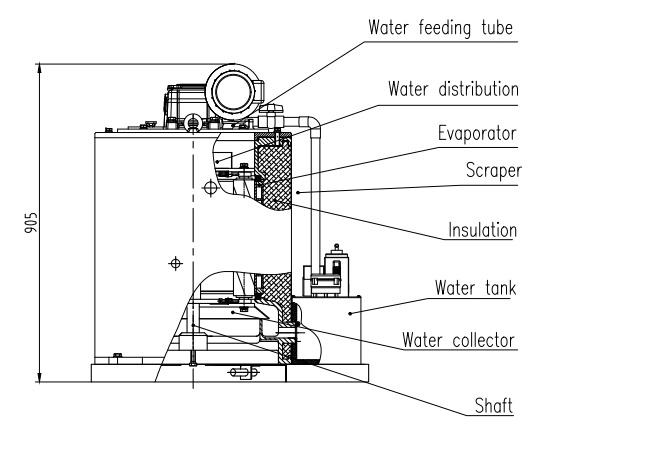
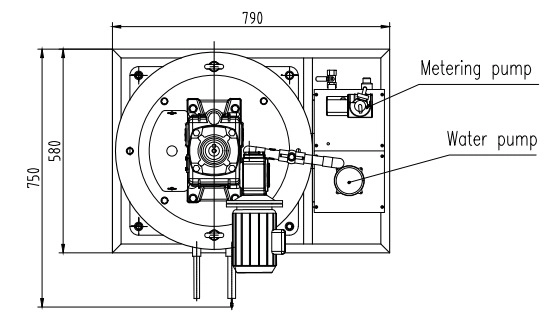
The evaporator is typically a vertical cylindrical drum, consisting of:
· Drum shell (carbon steel or stainless steel)
· Inner heat exchange surface (where ice forms)
· Refrigerant channels (circulating refrigerant such as R404A)
· Ice blade system (continuously removes ice)
· Main shaft and bearing system (ensures stable rotation)
The evaporator operates through a continuous cycle:
· Water forms a thin film on the inner wall
· Refrigerant absorbs heat and cools the surface below 0°C
· A thin ice layer forms instantly
· The rotating blade scrapes off the ice
· Ice flakes fall into storage
Material
Carbon steel (cost-effective, requires coating)
Stainless steel (recommended for durability and food-grade use)
Manufacturing Quality
Precision-machined inner surface
Uniform heat exchange design
High-quality welding (no leakage risk)
👉 A smoother surface improves ice release and reduces energy consumption.
3.2 Why the Evaporator Matters Most
The compressor provides cooling, but the evaporator determines how efficiently that cooling becomes ice.
Even with the same compressor, different evaporators can lead to:
· Different ice production capacities
· Different energy consumption
· Different lifespans
4. How Does a Flake Ice Machine Work?
The overall working process is simple and efficient:
· Water enters the evaporator
· The refrigeration system cools the surface
· Ice forms on the inner wall
· Ice is scraped off continuously
· Ice is collected for use
5. Applications of Flake Ice Machines
Flake ice is widely used across many industries:
5.1 Food Processing
Meat and poultry cooling
Vegetable preservation
Bakery temperature control
5.2 Fisheries & Seafood
Fresh fish storage
On-board vessel cooling
Ice slurry preparation
5.3 Supermarkets & Retail
Displaying seafood and fresh produce
Maintaining freshness and appearance
5.4 Concrete Cooling
Reduces concrete temperature in hot climates
Prevents cracking during curing
5.5 Chemical & Industrial Use
Reaction temperature control
Cooling during mixing processes
6. Why Choose Flake Ice Over Other Ice Types?

Flake ice stands out because:
· Faster cooling
· Better contact with products
· Lower mechanical damage
7. Maintenance Tips
To ensure long-term performance:
· Regularly clean the evaporator
· Check water quality (avoid scale buildup)
· Inspect scraper blades
· Maintain proper refrigerant levels
· Schedule periodic professional servicing
Conclusion
Flake ice machines are an essential solution for industries that require efficient, reliable, and gentle cooling. With their high efficiency, continuous production, and wide application range, they are one of the most practical ice-making technologies available today.
Whether you are in seafood processing, food preservation, or industrial cooling, investing in a high-quality flake ice machine can significantly improve your operational efficiency and product quality.