


What Is a Tube Ice Machine?
Release time: 2026-04-19
When you order a craft cocktail at a fancy bar or grab a cold soda from a fast-food restaurant, you rarely stop to think about the ice. But not all ice is created equal. While most people are familiar with cube ice or flake ice, there is a quiet workhorse of the commercial ice world: Tube Ice.
If you’ve ever seen a drink filled with hollow, cylindrical ice sticks with a small hole through the middle, you’ve already met tube ice. But what makes these machines special? Let’s dive into the science, benefits, and uses of tube ice makers.
What is Tube Ice?
Tube ice is exactly what it sounds like: ice formed in the shape of short or long tubes. However, unlike an ice cube tray that freezes water from the outside in, tube ice is formed on the inside of vertical stainless-steel tubes.
The most distinguishing feature of tube ice is that it is hollow. Because water freezes from the outside of the tube toward the center, the last bit of water inside gets drained away before it freezes solid. This leaves a neat hole running through the middle of the cylinder.
How Does a Tube Ice Machine Work?
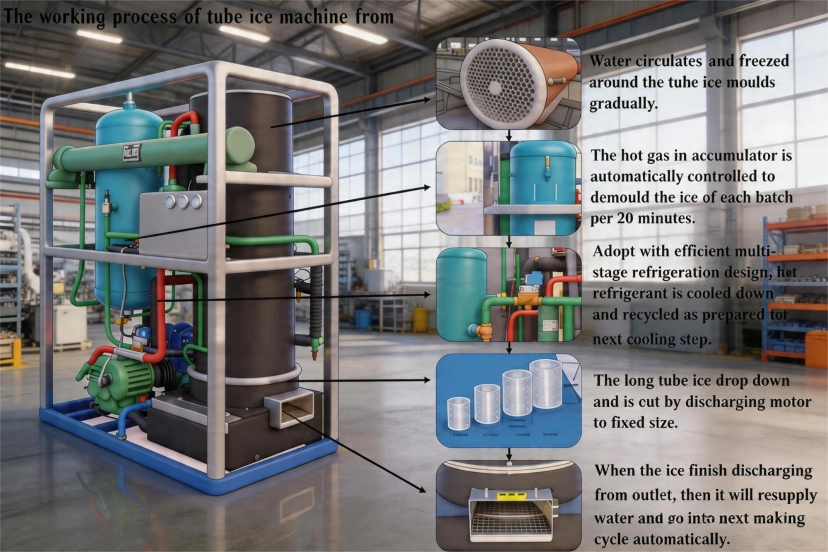
The process is a beautiful example of mechanical engineering meeting thermodynamics. Here is the step-by-step breakdown:
- Water Circulation: Water flows down the inside of vertical, freezing-cold metal tubes.
- Freezing: A refrigeration system cools the outside of the tubes. As the water trickles down, a layer of ice begins to form on the inner wall of the tube.
- Harvesting (The Magic Moment): Once the ice reaches the desired thickness (usually 5–12 mm), the machine stops the water flow. The machine switches to “harvest mode.”
- The Release: Hot refrigerant gas is pumped into the tubes. This warms the outer wall of the tube just enough to melt the thin outer layer of the ice.
- Gravity Drop: The cylindrical ice tube slides down the tube due to gravity and falls onto a rotating cutter blade.
- Cutting: The cutter chops the long tubes into short, uniform pieces (usually 1–2 inches long).
- Purging: A burst of water flushes the remaining water out of the hole in the ice, ensuring the tube stays hollow.
The “Hard” Truth: Why Tube Ice is Superior
One of the biggest selling points of tube ice is its hardness. Because the water is frozen rapidly from the outside in while constantly moving, it forces impurities (minerals and air bubbles) to the center. When that liquid center is drained away, it takes the impurities with it.
This results in ice that is:
- Dense: It melts much slower than flake ice or cloudy cube ice.
- Clear: The hollow center creates a crystal-clear appearance, making drinks look premium.
- Hard: It won’t shatter easily in a blender or melt quickly in a cooler.
Tube Ice vs. Other Types of Ice
| Feature | Tube Ice | Cube Ice | Flake Ice |
|---|---|---|---|
| Shape | Hollow cylinder | Solid square/rectangle | Soft, thin shards |
| Melting Speed | Slow (great for drinks) | Medium | Very fast |
| Surface Area | Moderate | High | Very high (max cooling) |
| Best For | Beverages, retail display | General use | Food preservation, seafood |
Where Do You Find Tube Ice?
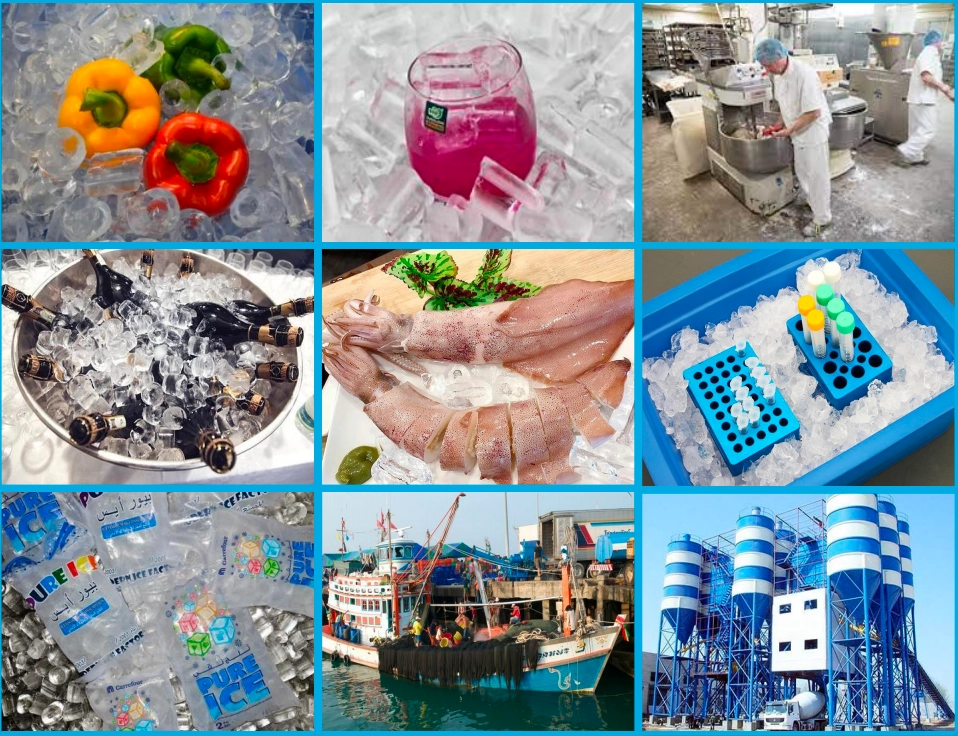
Because tube ice is hard, slow-melting, and dry (it doesn’t clump together), it is the preferred choice for specific industries:
- Hotels and Bars: Premium cocktails look better with clear, cylindrical ice. The slow melt prevents the drink from getting watered down.
- Fast Food & Cafeterias: Self-serve soda fountains use tube ice because it doesn’t splash as much as cube ice when it drops into a cup.
- Grocery Stores: Those bags of ice you buy for a party? They are often tube ice. The hollow shape allows the bag to flex without breaking, and the ice doesn’t freeze into one solid block.
- Salad Bars & Buffets: Tube ice is used to chill food trays. Because it is hard and slow-melting, it doesn’t turn the food display into a swimming pool of water too quickly.
- Fishing Boats: Tube ice is used to pack fresh catches. It chills the fish without bruising the flesh (unlike sharp flake ice).
Pros and Cons
Advantages:
- Efficiency: Uses less water and electricity than traditional cube makers.
- Durability: Ice lasts longer, saving money on production.
- Dryness: The ice doesn’t stick together, making it easy to scoop and bag.
- Low Maintenance: The freezing action is self-cleaning to a degree; the flowing water washes away sediment.
Disadvantages:
- Cost: Tube ice machines are generally more expensive to purchase than cube ice machines.
- Size: They tend to be larger and taller, requiring more ceiling height.
- Production Rate: They produce ice slower per square foot than some flake machines.
Conclusion
The tube ice machine is a marvel of functional design. While it may not be the most famous type of ice maker, it is arguably the most versatile. Whether you are sipping a whiskey on the rocks or keeping a hospital patient hydrated, there is a good chance that hollow, hard cylinder of ice came from a hard-working tube ice machine.
Next time you see a piece of ice with a hole in it, you’ll know exactly how it got there—and why it’s the best ice for the job.